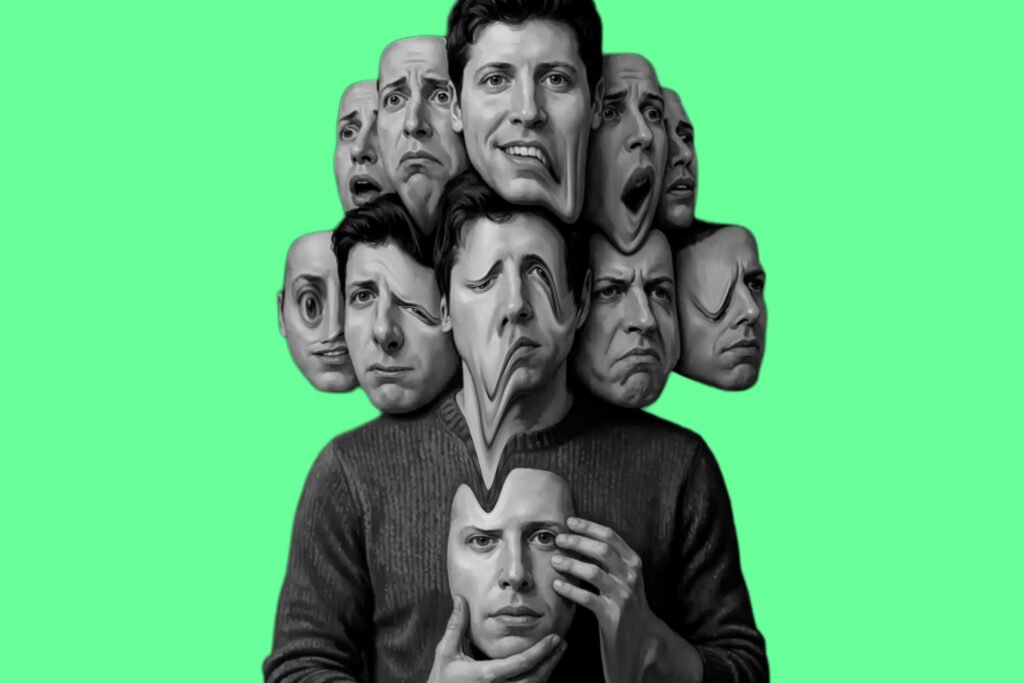

When The New Yorker published its profile of OpenAI CEO Sam Altman, the accompanying illustration became almost as discussed as the article itself. The image featured Altman in a blue sweater, surrounded by a haunting cluster of disembodied faces—distorted, emotional, and only vaguely resembling their subject. The real shock for many in the creative community came not from the unsettling imagery, but from the small disclosure at the bottom: “Visual by David Szauder; Generated using A.I.”
This moment highlights a growing tension in tech journalism and content creation. As artificial intelligence tools become more accessible, there’s increasing pressure to use AI-generated art to illustrate articles about AI itself. But does this practice actually serve readers, or does it create a confusing feedback loop where the medium undermines the message?
The Allure and Pitfalls of AI-Generated Imagery
AI art generators like Midjourney, DALL-E, and Stable Diffusion offer undeniable advantages for content creators. They’re fast, cost-effective, and can produce visually striking results with minimal technical skill. For publications covering breaking AI news, the temptation to generate accompanying images in minutes rather than commissioning original artwork is understandable.
However, this efficiency comes with significant trade-offs:
Lack of Conceptual Depth: AI tools excel at surface-level visual synthesis but struggle with metaphor, symbolism, and nuanced commentary.
Homogenization of Style: Many AI-generated images share recognizable aesthetic qualities, leading to visual monotony across publications.
Ethical Ambiguity: The training data for these models often includes copyrighted artwork without proper attribution or compensation.
Missed Opportunities for Human Expression: When we default to AI-generated illustrations, we lose the unique perspectives that human artists bring to complex topics.
Why Human-Created Art Matters for AI Coverage
Artificial intelligence is fundamentally reshaping our world—how we work, create, and understand intelligence itself. Covering this transformation requires more than just reporting facts; it demands thoughtful interpretation and critique. Human-created illustrations serve several crucial functions that AI-generated art cannot replicate:
1. Providing Critical Perspective
Human artists can offer commentary on AI technology through their work. A carefully crafted illustration can question assumptions, highlight contradictions, or visualize the human impact of technological change in ways that go beyond literal representation.
2. Maintaining Authenticity
There’s an inherent irony in using AI tools to illustrate articles that might be critiquing those very tools or discussing their limitations. This creates cognitive dissonance for readers and can undermine the credibility of the content.
3. Supporting Creative Communities
Commissioning original artwork from human illustrators supports the creative economy and ensures diverse perspectives in visual storytelling. As AI threatens many creative professions, publications have an opportunity—some might say responsibility—to champion human creativity.
Practical Alternatives to AI-Generated Illustrations
If you’re creating content about artificial intelligence, consider these approaches that don’t rely on AI art generators:
Commission Original Artwork: Work with illustrators who can bring unique conceptual thinking to your piece. The investment often pays off in distinctive, memorable visuals.
Use Thoughtful Photography: Well-composed photographs of technology in context, or portraits of the people building and affected by AI, can be more authentic than generated imagery.
Create Informational Graphics: Data visualizations, charts, and diagrams can effectively explain complex AI concepts without resorting to generic generated art.
Embrace Abstract or Symbolic Imagery: Sometimes, simple geometric forms, patterns, or symbolic representations can communicate ideas more effectively than literal illustrations.
The David Szauder Exception and Its Lessons
Returning to The New Yorker’s controversial illustration, it’s worth noting that David Szauder is no casual AI art dabbler. He’s a mixed-media artist with over a decade of experience working with generative processes that predate current commercial AI tools. His practice involves thoughtful engagement with technology as a creative medium, not just as a content generation shortcut.
This distinction matters. When artists intentionally use AI tools as part of a considered creative practice—understanding their limitations, interrogating their biases, and integrating them with human judgment—the results differ significantly from generic AI-generated filler art. The problem isn’t AI tools in principle, but rather their mindless application as a substitute for meaningful visual storytelling.
Looking Forward: A Balanced Approach to Visuals in AI Journalism
As AI continues to evolve, so too should our approach to illustrating stories about it. Here are principles for moving forward:
Match the Medium to the Message: If your article critiques AI art generators, using them for illustrations creates conflicting signals. Ensure your visual choices align with your editorial perspective.
Prioritize Conceptual Strength Over Novelty: An image’s value lies in what it communicates, not just how it was made. Choose visuals that enhance understanding, not just attract clicks.
Transparency Matters: If you do use AI-generated elements, disclose this clearly. Readers deserve to know when they’re looking at human versus machine creation.
Invest in Visual Literacy: As consumers become more aware of AI-generated content, they’ll increasingly value authentic, thoughtful imagery. Publications that cultivate strong visual identities will stand out.
The conversation about AI art in journalism reflects broader questions about automation, authenticity, and value in the digital age. While AI tools will undoubtedly play a role in future content creation, they shouldn’t become the default solution, especially when covering the technology itself. By choosing human creativity over algorithmic generation for our most important stories, we affirm that some aspects of communication and understanding remain fundamentally human endeavors—at least for now.
Comments (0)
Log in to post a comment.
No comments yet. Be the first!