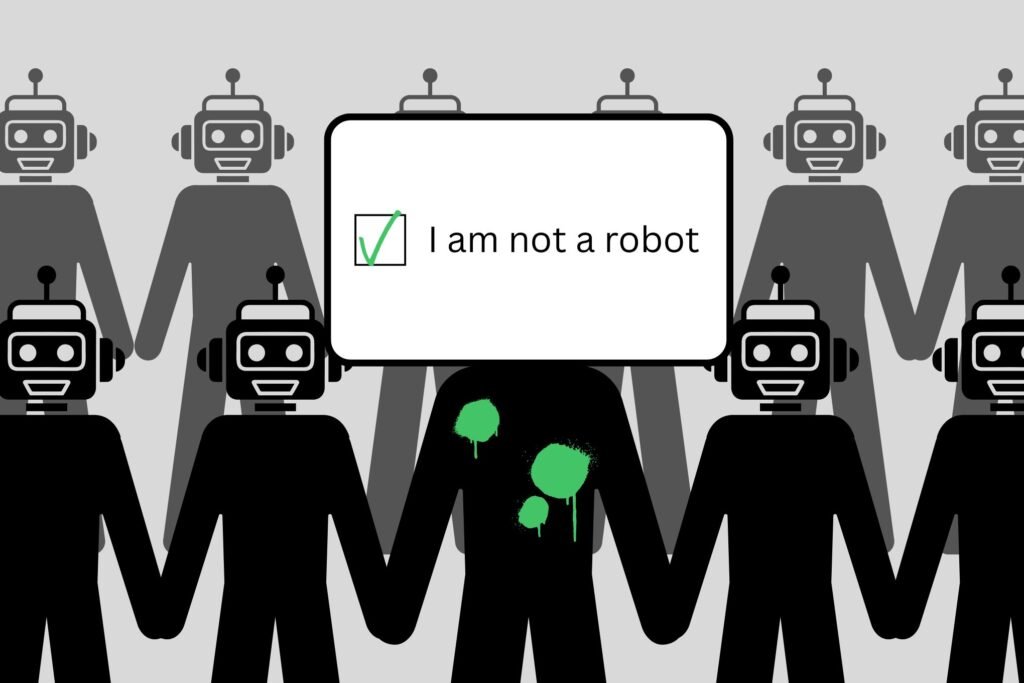

Have you ever posted a piece of art, a thoughtful essay, or a stunning photo online, only to have someone comment, “This looks like AI”? If you’re a creator in 2026, this is becoming an all-too-common experience. As generative AI tools produce increasingly sophisticated text, images, and videos, a new form of skepticism is eroding the foundation of online creativity. The burden of proof has shifted. It’s no longer about showcasing skill; it’s about proving you’re human.
This isn’t just paranoia. Major social platforms and content hubs are still struggling with consistent, transparent labeling for AI-generated material. When obvious synthetic content goes unflagged, everything becomes suspect. The unintended consequence? Authentic human creativity gets caught in the crossfire, its value diluted by widespread doubt.
The Case for a “Human-Made” Certification
So, what’s the solution? If the onus isn’t on AI to loudly announce itself, perhaps it’s time for humans to do so. Imagine a small, universally recognized badge—think of it like a “Fair Trade” or “Organic” logo, but for creativity. This “Human-Made” certification would be a voluntary standard that creators could apply to their work, signaling a clear, verifiable human origin.
Rebuilding Trust: A trusted badge would instantly communicate authenticity to an audience swimming in synthetic media, restoring value to human effort and perspective.
Empowering Creators: It gives artists, writers, and musicians a tool to differentiate themselves in a crowded, automated market.
- Creating a New Standard: Just as consumers choose organic food for specific values, audiences could choose “Human-Made” content to support human creativity, imperfection, and lived experience.
The logic is simple: the entities with the most motivation to clarify the origin of content are the humans whose livelihoods and artistic identities are at stake. The AI models themselves certainly aren’t going to raise their virtual hands.
Beyond a Badge: The Technical and Cultural Challenge
Of course, implementing such a system is fraught with complexity. It’s not just about a logo; it’s about building a verifiable chain of authenticity. How do you prove a digital file’s provenance? Potential solutions are emerging from the worlds of cryptography and Web3.
Blockchain and Watermarking: Technologies like cryptographic hashing and immutable ledgers could timestamp and sign a creative work at its source—the creator’s software (like Photoshop or Final Cut Pro). This creates a tamper-proof record of its human origin. Invisible digital watermarks, baked into the file by creative tools, could offer another layer of proof.
The “How” Matters as Much as the “What”: Perhaps the most compelling proof will be the process itself. The future may see a cultural shift where sharing the creative journey—the sketchbook scans, the draft revisions, the behind-the-scenes videos—becomes the ultimate authentication. This “proof of process” showcases the iterative, non-linear, and often messy human journey that AI, for all its power, cannot genuinely replicate.
The Bigger Picture: Redefining Value in a Synthetic World
This push for labeling is about more than just credit; it’s about a fundamental renegotiation of value. As AI becomes a standard tool in the creative kit, we must ask: what unique qualities do humans bring to the table? Often, it’s the context, the emotion, the story behind the work, and the fingerprints of imperfect, personal choice.
A “Human-Made” movement isn’t anti-technology. It’s pro-context. It allows for a marketplace where AI-generated efficiency and human-crafted depth can coexist, each with clear labels so consumers and audiences can make informed choices about what they consume and support.
The conversation is already starting among artists, developers, and ethicists. The goal isn’t to stifle innovation but to foster a healthier, more transparent digital ecosystem. In an age where anything can be synthesized, the most radical act might be to proudly, and provably, declare: “This was made by a human.”
📝 本文基于 The Verge AI 的报道,由 AI 编辑改写整理。如有侵权请联系删除。
Comments (0)
Log in to post a comment.
No comments yet. Be the first!